
Generative AI Development Services
Automate routine communication, streamline content creation processes, enhance knowledge-driven workflows, and achieve other operational objectives with generative AI development. SysGears offers everything from consulting and model training to full-cycle engineering and post-release maintenance.
Generative AI In Business
Generative AI transforms and automates processes, both internal and customer-facing. According to Stanford HAI research, generative AI has reached close to 53% population-level adoption within three years of its mass-market introduction, with 70% of surveyed organizations reporting genAI use for at least one function in their operations.
When integrated with relevant data and business systems, it can assist with analysis, content creation, and information delivery across different formats and environments. It can improve processes that would otherwise take people significant time and help teams handle work at a scale that would be impractical to manage manually.
Some high-value applications of generative AI in business include:
- Customer self-service and personalized engagement
- Audio and visual content creation platforms
- Analytics summarization and report generation
- Real-time translation and transcription
GenAI Development Services We Provide

Generative AI App Development
Our team builds AI-powered applications, from general concept and model configuration to full-stack engineering and deployment. We build solutions for tasks such as summarization, audio/visual content generation, workflow automation, and more, supporting both internal operations and customer-facing services. This lets you leave implementation to a proven team of experts and focus internal capacity elsewhere.

Generative AI Consulting
Our expert consultants help you identify where GenAI fits into your existing workflows and which use cases offer the greatest business value. Our specialists can also help you conceptualize, plan, and implement an AI-powered application from the ground up. With SysGears, you can start a GenAI development project with a clear, structured, experience-based roadmap that guides every step of the SDLC. Alternatively, we can conduct a software audit of your existing solution to detect issues with, and propose improvements to, its security, performance, accuracy, and more.

RAG and Fine-Tuning
We can implement retrieval-augmented generation in your solution or fine-tune large language models (LLMs) to improve accuracy and consistency in complex workflows and domain-specific tasks. RAG retrieves relevant documentation so the model uses up-to-date information in its output, while fine-tuning trains the model on predefined, strict workflows and response structure. We can use whichever best fits your project, or opt for a combined approach as needed.

AI Chatbot Development
Our engineers create AI chatbot solutions that can reinforce your customer engagement and support workflows, streamline access to information, or achieve other business goals. These chatbots can provide 24/7 user support, process user-uploaded documentation, and store conversation history for easy reference at a later point, becoming valuable tools in your company’s internal operations or service model.

Integration and Configuration
Our experts can integrate a suitable AI model into existing systems, based on your technical and operational requirements, to expand its functionality or streamline certain workflows. We can develop APIs and integration logic while accounting for safety and privacy regulations and implement the needed user and admin controls, from interface changes to validation steps for sensitive, high-risk processes.

Testing and Quality Assurance
If needed, our experts evaluate your generative AI application’s accuracy, performance, and security against established requirements. Our quality assurance engineers combine automated tests with manual evaluation of model responses, including ambiguous inputs, unexpected requests, and other challenging scenarios. We also test application resilience against integration failures, API timeouts, and other operational issues.

GenAI App Maintenance
SysGears offers routine troubleshooting and maintenance in a post-release solution, whether it was developed by our experts or not. This frees up in-house capacity for product expansion or new projects while we handle routine debugging, dependency updates, feature refinement, and ongoing security patches. We can also evolve the maintenance engagement into functionality and scope expansion as your needs change if you require additional, high-involvement development.
How We Ensure GenAI Output Accuracy and Reliability
There are multiple approaches we take in generative AI software development to ensure that the model’s output is both accurate and consistent:

Development and Edge-Case Testing
We test expected scenarios, edge cases, and failure modes throughout development and QA to identify where the model produces inaccurate, inconsistent, or unsafe responses before release. We then isolate and eliminate any identified issues before they reach end users.

Specialized Evaluation
We prepare task-specific test datasets and run automated evaluations (“evals”) to measure how accurately and consistently the model performs. Changes to prompts or model configuration can trigger these evaluations automatically, helping us detect regressions and roll back changes that reduce output quality.

Architecture and Prompting
The right combination of model, context, prompting, and configuration can improve outputs on specialized tasks, while RAG provides relevant source material. Where prompting and retrieval alone are not enough, fine-tuning can be used to further improve performance on specific tasks.

Continuous Monitoring
After deployment, we can monitor model interactions for unusual, low-quality, or incorrect responses. Our experts can set up automated AI monitoring that flags suspicious outputs for human review, as well as regression testing that helps detect any decline in response quality over time.
Why Choose SysGears as Your Generative AI Development Company

We specialize in artificial intelligence technology and have delivered many AI-powered solutions over the years that involve genAI integration, RAG implementation, and fine-tuning. We can build complex generative AI systems for enterprises, optimize token usage in existing systems, understand how to minimize security risks associated with AI use, and know the intricacies of proper QA for AI-powered applications. For more, see our insights on AI and its implementation.

16+ years of experience, over 350 corporate clients, and more than 110 software engineers on the team. Together, these numbers show the experience and team capacity behind our AI development services. By working with us, you get a seasoned engineering partner supported by AI-driven productivity, not an upstart developer that relies on it.

Our services are guided by industry best practices, hands-on engineering experience, and a deep understanding of your business context, which we build during the discovery phase. Our engineers make quality a top priority, with impact analysis, peer review, and continuous quality assurance throughout the process to ensure the product meets both business and technical expectations.

Provider-Agnostic Capabilities
SysGears is not affiliated with any specific AI model provider or platform vendor. We can consider the need to proactively avoid vendor lock-in during technical planning and engineer the solution with future migration in mind. We have extensive experience with OpenAI, Google, and Anthropic models, and can integrate other ones, including open-source or proprietary models. This flexibility helps you choose a model that fits your requirements and can make it easier to consider alternatives if those requirements change.

Flexible Engagement Models
We understand that each development project varies based on timeline or budget restrictions, in-house engineering capacity, current stage, and other factors that dictate the format a development partnership takes. This is why we offer three distinct cooperation models: outsourcing, dedicated teams, and AI staff augmentation. The right choice comes down to a set of variables unique to your case, and we would be happy to discuss your preferred engagement format.
Maintainability by Design
At SysGears, while we offer long-term maintenance services post-release, we also understand the benefits of building software with maintainable architecture, clean code, and thorough documentation from the start. These things make general support and later evolution of the application easier and more cost-effective long-term, whether we are involved or not.

Ready to transform your operations with generative AI or build an AI-powered product?
Industries We Can Apply Generative AI Development In


The Technology Stack We Use For Generative AI Software Development
AI Frameworks
LangChain
LangGraph
AI SDK
BeeAI
Mastra
Platforms
OpenAI
Google Gen AI
Anthropic
Vector Databases
Pinecone
pgvector (PostgreSQL)
Cloud / Infrastructure
AWS
GCP
Azure
Apache Mesos
DC/OS
Databricks
Docker
Big Data
Scala
Python
Apache Spark
Kafka
ELK
Akka
ZIO
Python Pandas
Examples of Our Generative AI Development Work
AI-Powered Home Care Management Software
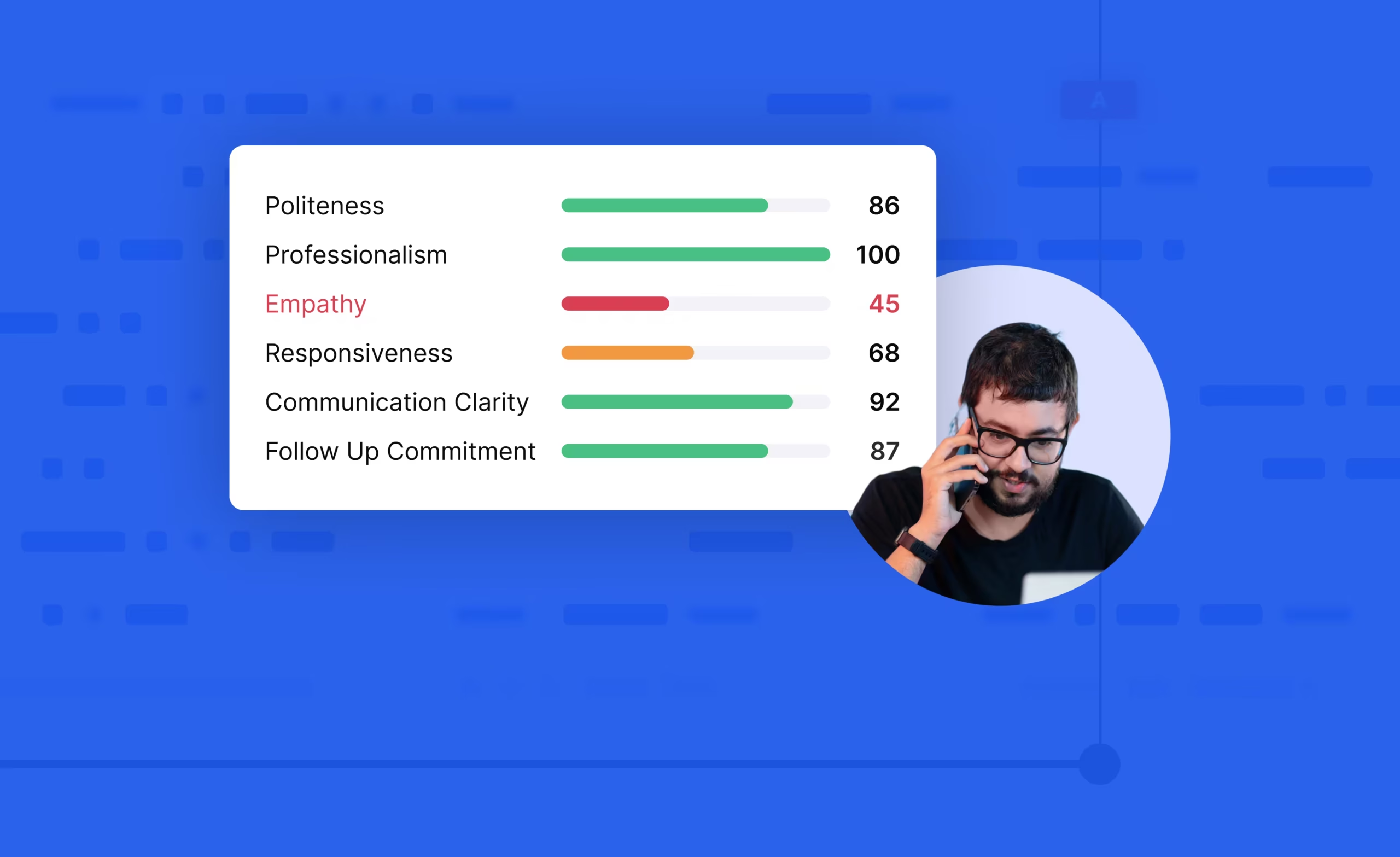
The client had a clear vision for a home care management system that enhances service quality with the help of AI. Our services covered the entire SDLC: cost assessment, business analysis, project management, architecture and UI/UX design, full-stack development, and QA. The platform uses AI for summarization and advanced analysis of calls and their automated evaluation on clarity, empathy, professionalism, politeness, and responsiveness. The AI analysis feature also generates performance scores for both individual employees and the agency as a whole.

We developed an AI-powered dream analysis app for a client looking to help people understand their subconscious. We integrated ChatGPT as the AI engine for dream interpretation and implemented backward compatibility to streamline the update process for end-users. Our experts also helped segment the app’s user base by time zone, implemented a localization workflow that doesn’t require redeployment, and configured the app for seamless scalability as user volumes grew.
AI-Powered Virtual Lab for Biotech R&D
Our client approached us for a Python backend developer to handle debugging and routine engineering tasks in a near-release solution. Soon after getting started, our expert identified several critical issues that would have prevented a successful launch into real-world conditions, and our partnership evolved to include migration and modernization services. We fully revamped the platform’s architecture and data storage systems while also introducing a central authentication service for the project’s multiple applications and consolidating admin workflows into a single backend.
What Customers Think About Our Services

5.0

“SysGears developed and tested the code, held handover meetings with the Persist AI software engineering team, and addressed follow-up questions to make sure we had everything we needed to do later feature additions and maintenance.”
Christopher Shelner
COO, PersistAI Formulations Corp
5.0
“SysGears’ work has reduced manual data entry by 40%, increased patient engagement metrics by 20%, and reduced operational costs by 20%. The team delivers on time, responds to needs, and demonstrates professionalism. Their expertise, proactiveness, and dedication to innovation are impressive.”
Senior Engineering Manager, Health Tech Software Company
5.0
“The team has worked wonderfully and communicated flawlessly throughout the entire project.”
Robert Simunic
Sales Director, Carveco
5.0
“I am a start up company with a lot of moving pieces and SysGears has been able to assist me repeatedly in tasks outside our original scope of work.”

Adam Watt
CEO & Founder, Active Link Software
How to Start a GenAI Development Project with SysGears?
Have a generative AI development project in mind? Schedule a meeting, contact us via email at info@sysgears.com, or use the on-page chatbox to tell us about it.
You don’t necessarily need to have all of the precise details when we talk, as we can join you in the earliest stages of development and help you conceptualize and strategize as well. If our conversation involves confidential information, we are happy to sign an NDA before that information gets shared with our experts. In our first call, we’ll discuss your project goals, current stage, and engagement model you would prefer. Once we’ve settled on the scope of work, we formalize our partnership with a service agreement and get to work.
For more details on what the start of the project looks like, read our page about it.
FAQ
What can generative AI realistically do in our product today — and what still can’t be trusted to it?
Generative AI can assist with a range of content workflows, including summarization, drafting, translation, and transcription. It can also support routine software development tasks, such as code generation and documentation.
In customer-facing applications, generative AI can enable personalized recommendations and automate responses to common requests. Combined with other AI techniques, it can also help classify and prioritize customer requests, orders, and support tickets based on predefined criteria.
However, it cannot guarantee factual or numeric accuracy with 100% certainty and should not be allowed to make independent high-risk decisions; for instance, AI-generated code can contain critical errors or security vulnerabilities. This limits AI’s ability to operate independently in high-risk fields without expert human oversight and output validation and, at this stage in its growth, makes it a valuable tool that streamlines certain workflows rather than automating them.
Here at SysGears, we can assess your business goals and tell you realistically whether or not generative AI, at the level it is available today, can achieve them with an acceptable balance of quality and risk, and how much human evaluation it would require.
How much does it cost to build generative AI solutions?
At SysGears, we use a time-and-materials pricing model, with rates ranging from $39 to $80 per hour based on the seniority, role, and level of involvement of each of our experts working on your project. We can provide a rough project estimate before committing, and a tailored one after assessing the overall scope of the work, to simplify resource planning and allocation.
Do we need a custom model, or is fine-tuning or RAG on an existing foundation model enough?
A custom model may be worth considering when existing models cannot meet key requirements for capabilities, deployment, privacy, or performance. Whether to build one depends on the use case and available resources for the project. RAG can provide access to frequently updated sources at response time and retrieve the information most relevant to a given query or task. Fine-tuning can adapt a model’s behavior or style and improve how consistently it follows specific output patterns. The right approach depends on the use case, and these methods can be combined.
We can assess your intended use case for the AI model and recommend an approach that will best fit the way your solution is expected to be used, ensuring an optimal balance between time & cost, performance, and accuracy.
How do you build guardrails, human review, and fallbacks into an AI-generated workflow?
When working on AI-powered workflows, we take multiple steps and approaches to ensure resilience and accuracy:
- Pre-processing guardrails: screening user input, masking personally identifiable information where appropriate, and proactively applying security controls to reduce prompt injection risk.
- Post-processing guardrails: enforcing strict output formats with validation frameworks, executing fast checks before expensive classifiers, and allowing models to say “I don’t know” when they don’t have enough trusted data for a conclusive answer.
- HITL review: explicitly stopping high-stakes workflows for human validation, as well as flagging and logging human-required actions in a dedicated location.
- Fallbacks: defining specific failure models, set iteration, tool, and execution limits, and fall back to a rule-based response or an alternative model if the primary one times out.
Who owns the model, the prompts, the fine-tuned weights, and the training data at the end of the engagement?
You own all project-related code and intellectual property that is not otherwise subject to other licenses, such as third-party tools. This is explicitly outlined in the legal documentation we sign at the start of our partnership to protect both parties from IP theft and other forms of fraud.
What happens if our chosen model gets deprecated or the provider changes pricing — are we locked in?
We sit down with your stakeholders and lead technical staff to discuss the current state of the project and the way forward together. When we design or update the backend, we can account for potential model changes. The effort to switch providers will depend on the model-specific integrations and features the solution uses. In the event that you are locked in due to choices that were optimal at the time, we are ready to assist you in untangling the dependency on one provider if that’s best for your business operations, even if it involves major refactoring of the solution’s code.
When should we use OpenAI/Anthropic APIs versus a self-hosted open-source model like Llama?
The answer depends on what you plan to use the model for. Total costs of these options vary with usage volume, AI model requirements, infrastructure, and the effort needed to run and maintain the system. Typically, managed APIs can prove more cost-effective for small and mid-sized products by helping businesses avoid the fixed infrastructure and maintenance costs of self-hosting. Self-hosting is usually considered when there are specific requirements around deployment, data control, customization, or sufficiently large and predictable workloads.
Our business analysts can assess your business environment and generative AI plans to help you identify the best approach for your unique case.
Boost your business with custom software
Tell us about your business needs and we’ll suggest a solution
Thank you!
We have received your request and will get back to you within 1 business day.


