
Robotic Process Automation (RPA) Development Services
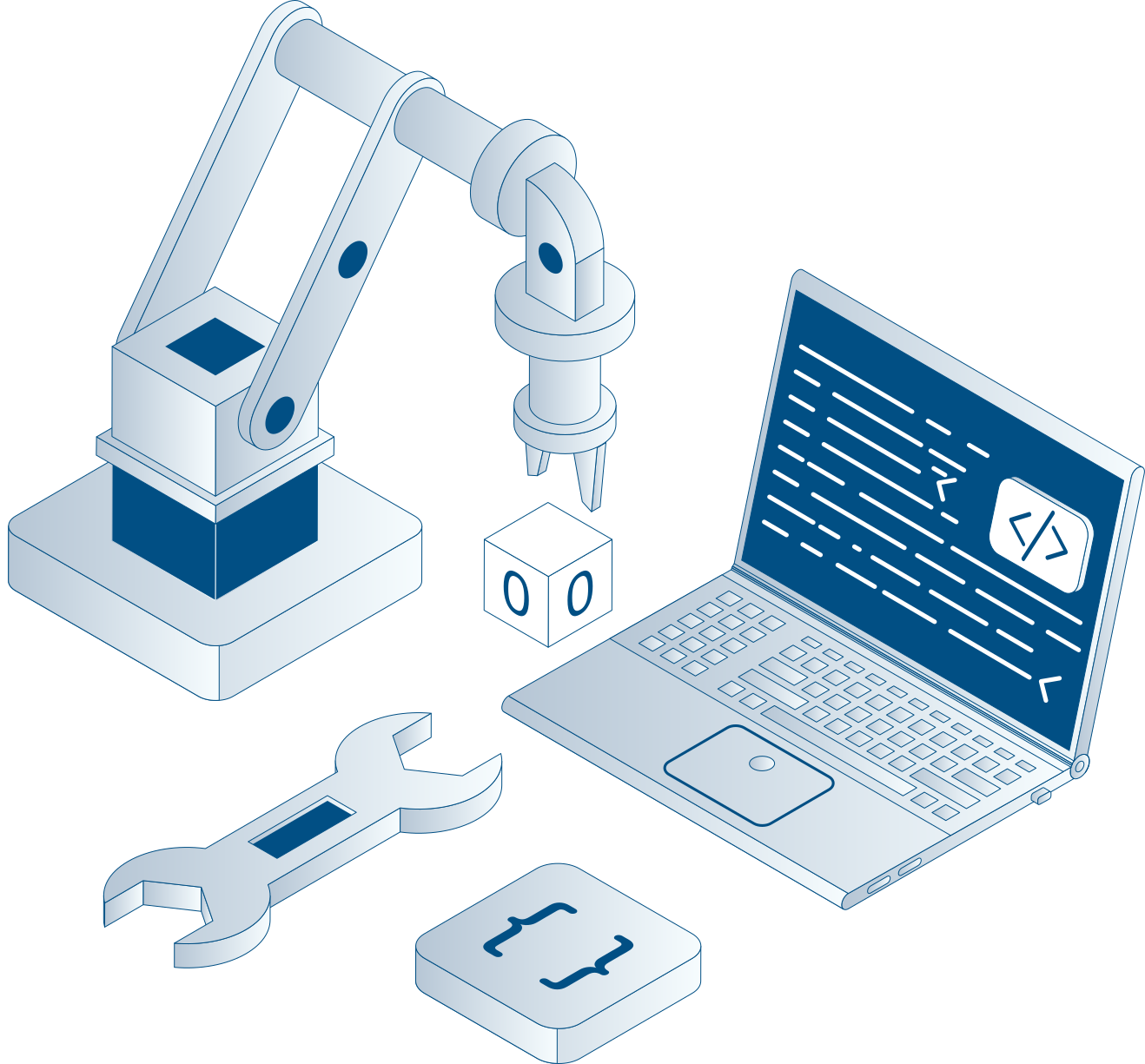
SysGears provides RPA development services for organizations with repetitive, rule-based work across business systems such as ERP, CRM, and HRM, as well as portals and legacy applications. Bots can transfer data, reconcile records, and route documents between systems, with exceptions flagged for follow-up. This approach keeps your existing software in place and gives your team more time for work that requires their expertise.
Our Work Has Earned Industry Recognition




Our Clients’ Trust Means More Than Words

5.0

“SysGears put in an effort to make sure our project was completed with high quality.”
Christopher Shelner
COO, PersistAI Formulations Corp
5.0
“Their level of engagement, long-term mindset, and solid technical expertise make them a really reliable partner.”
Anastasiia Chala
CMO, Stormotion
5.0
“SysGears team feels like a part of our team, always interested in the overall project success.”
Jane
Client Success Manager, Custom Software Development Company
RPA Development Services We Offer

Our IT consultants help you plan new RPA initiatives or determine how to improve your existing automation setup. As part of our RPA consulting services, we assess business workflows and review the applications involved, taking into consideration factors like process complexity, exception frequency, and integration limitations. Based on your requirements, our experts recommend suitable RPA tools, prioritize automation opportunities, and prepare a development roadmap with preliminary cost and timeline estimates.

SysGears’ engineers develop custom RPA bots that automate repetitive operations throughout your business applications. Our engineers translate your workflow requirements into executable logic, configuring the steps, conditions, and data-handling rules each bot needs to follow. Also, we implement checks for missing or inconsistent information, along with procedures for managing exceptions and transferring unresolved tasks to employees.

Our team integrates RPA solutions with your business applications (for instance, CRM, ERP, HRM, BI, or legacy systems), taking into account their existing interfaces and technical limitations. Where suitable APIs are available, our developers use them in order to exchange data directly with relevant systems. For software with limited or no API access, bots can perform the required operations through the user interface. We also handle the technical setup and deployment in the agreed execution environment, configuring the necessary access permissions and runtime settings.

RPA Audit and Optimization
If you already use RPA but face recurring errors, unreliable workflows, or costly maintenance, we can be of help. Our engineers examine your current automation framework to identify issues in bot logic, application interactions, and error handling. Based on what we find, we refactor problematic components, improve integration methods, and update existing workflows. This way, you will be able to address specific technical limitations without necessarily replacing the entire solution.

RPA Maintenance and Support
Changes to business rules, application interfaces, or connected systems may require updates to your bots. SysGears provides software maintenance and support to address defects, modify automation logic, and implement new functionality or integrations. We can also test the affected workflows after changes to verify that the automation continues to perform as intended. We can adapt the scope of our maintenance and support services to your project’s technical requirements.
Robotic Process Automation Solutions We Develop
SysGears develops attended bots that your employees can use to automate routine steps in their daily work. For example, a customer service representative can launch a bot to retrieve information from several applications and populate a support case with relevant details. Your staff members can then review the results and decide how to proceed.
Unattended bots execute predefined workflows automatically. They do not require an employee to initiate each task. Bots of this kind can either run on a schedule or respond to specific system events. For instance, a bot can collect records from multiple applications overnight and compare them against established rules. Then, it can prepare a report of discrepancies for the next business day.
Some business processes require a combination of employee-assisted and fully automated operations at different stages. SysGears’ development team can create workflows where an attended bot prepares information for employee review, and an unattended bot completes the remaining operations once the request is approved.
Connecting RPA Bots to Your Business Systems

For applications without suitable APIs, SysGears can develop bots that interact directly with desktop or web interfaces. Using UI selectors and other interaction methods, these bots can identify fields and controls, enter or retrieve data, and navigate through the required workflow. Because the automation depends on the application’s interface, our engineers take into consideration changes to UI elements, response delays, and session timeouts during development and testing.

When an application provides the necessary API endpoints, our developers at SysGears can use them in order to retrieve records, submit updates, or trigger operations directly. This avoids unnecessary UI interactions and is often better suited to large volumes of data or complex workflows. However, the implementation must still account for authentication, access permissions, API usage limits, and potential errors in communication between systems.

Business workflows often involve applications with different integration capabilities. At SysGears, we can combine API calls and UI-based interactions within a single automation solution. For instance, a bot could retrieve order details through an ecommerce platform’s API and then enter them into a legacy warehouse management system through its interface. Our experts also take into account how exactly data maps between applications and how the workflow should recover if one operation succeeds but a subsequent step fails.
Technologies Behind Our Healthcare Automation Solutions
Programming Languages
JavaScript
TypeScript
Python
Scala
Go
Frontend
React
Next.js
React Native
Expo
Redux
MobX
Apollo Client (GraphQL)
Vite
JavaScript/TypeScript Backend Ecosystem
Node.js
Express
NestJS
Apollo Server (GraphQL)
WebSockets
BullMQ
Redis
Swagger
Sentry
TypeORM
Prisma
Mongoose
Scala Backend Ecosystem
Play Framework
http4s
Akka / Pekko
ZIO
Cats
FS2
Slick
Quill
Doobie
Caliban
Python Backend Ecosystem
FastAPI
Django/DRF
Flask
Celery
SQLAlchemy
Pydantic
Pandas
NumPy
LangChain
LangGraph
Databases
MySQL
PostgreSQL
MongoDB
Cassandra
DynamoDB
Firebase FireStore
Firebase Realtime Database
Redis
Supabase
Neo4j
Dgraph
QDrant
Testing Tools
Jest
React Testing Library
Cypress
Enzyme
Mocha
Chai
Puppeteer
ScalaTest
PyTest
Gatling
Playwright
Cloud & Infrastructure
AWS
GCP
Azure
DigitalOcean
Apache Mesos
DC/OS
Prometheus
Grafana
Terraform
Docker
Kubernetes
AI Integrations
OpenAI APIs
Azure OpenAI Service
Vertex AI
VAPI
Claude
Whisper engine (CUDA)
Gemini
Amazon Rekognition
Big Data
Apache Spark
Airflow
Databricks
Kafka
ELK
Pandas
NumPy
UI Frameworks
Material UI
Tailwind CSS
Ant Design
NativeBase
Tamagui

Ready to automate your business processes? SysGears can help you develop new RPA bots or improve your existing automation.
Our Projects and Relevant Engineering Experience
SysGears’ seasoned experts help clients automate time-consuming workflows, improve how data moves between systems, and build software that supports complex business operations. The projects below show how we have tackled these challenges in practice, along with the engineering experience we bring to RPA development.



RPA Solutions Across Industries
SysGears’ team developed software for a wide variety of industries, including healthcare, financial services, manufacturing, and logistics. Drawing on this experience, we identify RPA opportunities in repetitive data transfers, record verification, and other rule-based tasks. The examples below show how bots can match payments to invoices, transfer approved visit hours to payroll, and update orders with shipment details.
Healthcare, Life Sciences, and Home Care
Industrial Operations and Infrastructure
Transportation and Logistics
Update shipment statuses from carrier portals. Attach delivery receipts to shipment records.
Manufacturing
Enter supplier confirmations into your ERP. Flag delivery dates that differ from purchase orders.
Energy & Utilities
Import meter readings into billing software. Identify missing readings before invoicing.
Financial Services and Real Estate

Commerce and Digital Services

Ecommerce
Update marketplace stock levels by SKU. Transfer shipment tracking numbers to customer orders.
Travel and Hospitality
Record cancellations from booking channels. Update room availability after confirmation.
Media and Entertainment
Compare planned film and TV releases with licensing dates and territories. Flag conflicts before publication.
Why Choose SysGears as Your RPA Development Company?

With more than 16 years of software engineering experience and over 350 clients, SysGears has been developing enterprise applications, modernizing legacy software, and integrating systems built on different technology stacks. We rely on this experience when designing RPA solutions that need to operate across multiple business systems without disrupting their existing functionality. We understand the challenges of working with established software environments: applications may have different data structures, access restrictions, and integration capabilities, and we build solutions accordingly.

At SysGears, we follow an established quality management framework that includes code reviews, manual and automated testing. In RPA projects, we test how bots perform across connected applications in order to verify that data is processed correctly and workflows produce the expected results. Our engineers also focus on the structure of the automation logic, which makes it easier to modify individual steps, update business rules, and maintain the solution as requirements change.

RPA bots often have access to sensitive business data, which includes financial records and customer information. Our engineers work in accordance with established security practices, implementing measures like role-based access control, secure credential management, audit logging, and encryption of data in transit and at rest. We also take into consideration applicable regulatory requirements, including GDPR and HIPAA, when designing how bots access, process, and transfer information between systems.
Robotic Process Automation Development Process
Regardless of whether you are introducing RPA for the first time or looking to improve an existing automation, SysGears organizes the development process around your current software environment and business requirements. Our team can join your project at different stages and adapt the work accordingly. Below is an overview of how we typically approach the robotic process automation services we provide.
Business Analysis and Process Assessment
Our business analysts start by examining the workflows you want to automate. To better understand how tasks are performed in practice, we work closely with your team to document the sequence of operations, required inputs, business rules, and exceptions. We also consider potential situations where employees may need to intervene in an automated process. Based on the findings, we establish the automation requirements and define the expected results for each workflow.
System Design and Planning
Before designing the automation, our engineers assess the systems it will work with (their interfaces, access restrictions, and dependencies). Given these results, we decide which technologies to use and how to organize the bot’s logic around the available functionality. Our specialists also plan where the automation will run, how credentials and permissions will be managed, and what should happen if an operation fails. With these decisions made, our team can estimate the development effort, prioritize the work, and establish key milestones.
Bot Development and Integration
Our developers build and configure RPA bots in short iterations, gradually implementing the required functionality and connecting it to your existing applications. We also incorporate your business rules into the automation. This includes checks for incomplete or incorrect data as well as instructions for handling exceptions. During regular demos, you can see the workflows in action, share feedback, and request changes before the next development cycle begins.
Testing and Validation
Our QA engineers verify that the bots perform the required operations correctly and produce the expected results across connected applications. Beyond standard execution scenarios, we test how the automation handles incomplete data, expired sessions, unavailable systems, and interrupted transactions. We also run regression testing when changes are introduced to make sure previously working operations remain unaffected. Your team can review the results and confirm that the solution meets the agreed business requirements before release.
Deployment and Maintenance
We prepare the automation for production in the agreed execution environment, configure the required access permissions, schedules, or triggers, and verify its operation after deployment. If further assistance is needed, SysGears can provide maintenance and support to help fix defects, adjust bots to changes in connected applications, and also update existing workflows as your business requirements evolve.
Explore Cooperation Models for Your RPA Project
Full-Cycle Development
Outsource development of your RPA solution to SysGears’ team of professionals. We coordinate the work from technical and architectural planning to implementation, integration, and testing, then deploy the software. After launch, we can provide maintenance or continue development as needed.
Dedicated Teams
A dedicated team can work on a defined part of your RPA project or support ongoing development over time. We assemble specialists based on the required skills and coordinate with your product and engineering stakeholders around agreed priorities. The team’s composition can be adjusted as the project evolves.
Staff Augmentation
Add RPA and software specialists to your existing engineering team to bring in specific expertise or additional capacity. They work within your established processes and take direction from your technical leads, contributing to the parts of the project that need extra support.
How to Start Working with SysGears?
Have a project in mind but not sure where to begin? You can discuss it with our team even before finalizing the technical requirements.
Simply leave a message through our contact form or website chat, email us at info@sysgears.com, or book a call with the help of our online calendar.
We will start by learning about your idea, what you have already accomplished, and what kind of development assistance you are looking for. Our specialist will also explain the available cooperation options and answer your questions about working with SysGears.
If the discussion involves confidential materials, we will sign an NDA beforehand. After settling the project details and contractual terms, we can move forward with the agreed work.
Find out more about our cooperation process here.
FAQ
What do robotic process automation development services include?
RPA development starts with reviewing the existing workflows to identify the tasks that can be automated and the rules the bot must follow. The work then includes developing and configuring an RPA bot, integrating it with the necessary applications, testing different execution scenarios, and preparing the solution for deployment. At SysGears, we cover all the above-mentioned parts of the process, and, if required, we can also provide maintenance and support services once the bot is deployed.
Which business processes are a good fit for RPA, and which are not?
RPA is particularly useful for tasks that can be broken down into specific steps with clear rules for each action. This applies to entering invoice details into accounting software, transferring records between ERP and CRM systems, generating routine reports, and validating data against predefined criteria. Tasks that involve unpredictable inputs or decisions that depend heavily on human judgment are less suitable for rule-based bots. SysGears examines how your team performs these tasks, taking note of how they handle exceptions, in order to identify practical opportunities for automation.
How much do RPA development services cost?
Automating a single business process may cost around $10,000-$50,000. When it comes to larger RPA implementation services involving multiple bots and applications, costs can exceed $250,000. Platform licensing, execution infrastructure, and ongoing maintenance can also increase the total cost of ownership beyond the initial development expenses. Our hourly rates range from $39 to $80, depending on a specialist’s role and seniority. We estimate project costs based on the workflows you want to automate, the systems involved, and the technical requirements.
How long does it take to get the first RPA bot into production?
A relatively simple bot that transfers data between two existing applications can be ready for production within 3–4 weeks. A more complicated workflow, especially one involving several systems and numerous exceptions, could take 6–12 weeks or even longer. Limited access to test environments or lengthy internal approvals can also extend development time, and SysGears considers these factors before estimating project duration. Throughout the development process, we hold regular demos so you can see how the automation performs and request changes before deployment.
Can RPA automate work in our legacy systems without replacing them?
Yes. RPA bots are able to interact with legacy desktop applications, web portals, ERP systems, as well as other software through their existing user interfaces, even when APIs are unavailable. They can enter data, retrieve records, and perform predefined operations without requiring changes to the underlying applications. However, updates to an application’s interface or behavior can affect the automation and require additional testing or adjustments. At SysGears, we analyze the available integration options to determine how RPA can work with your software before proceeding with implementation.
How do RPA bots handle errors and unexpected situations?
RPA bots can be programmed to validate data before processing, retry failed operations when safe, and log errors for further investigation. For instance, if a bot comes across a missing invoice number or cannot access the required system, it can stop the affected task and flag it for employee review. At SysGears. we define exception-handling rules during development and test how the automation responds to different failure scenarios.
Boost your business with custom software
Tell us about your business needs and we’ll suggest a solution
Thank you!
We have received your request and will get back to you within 1 business day.


